29 Oct 2010
· cycling
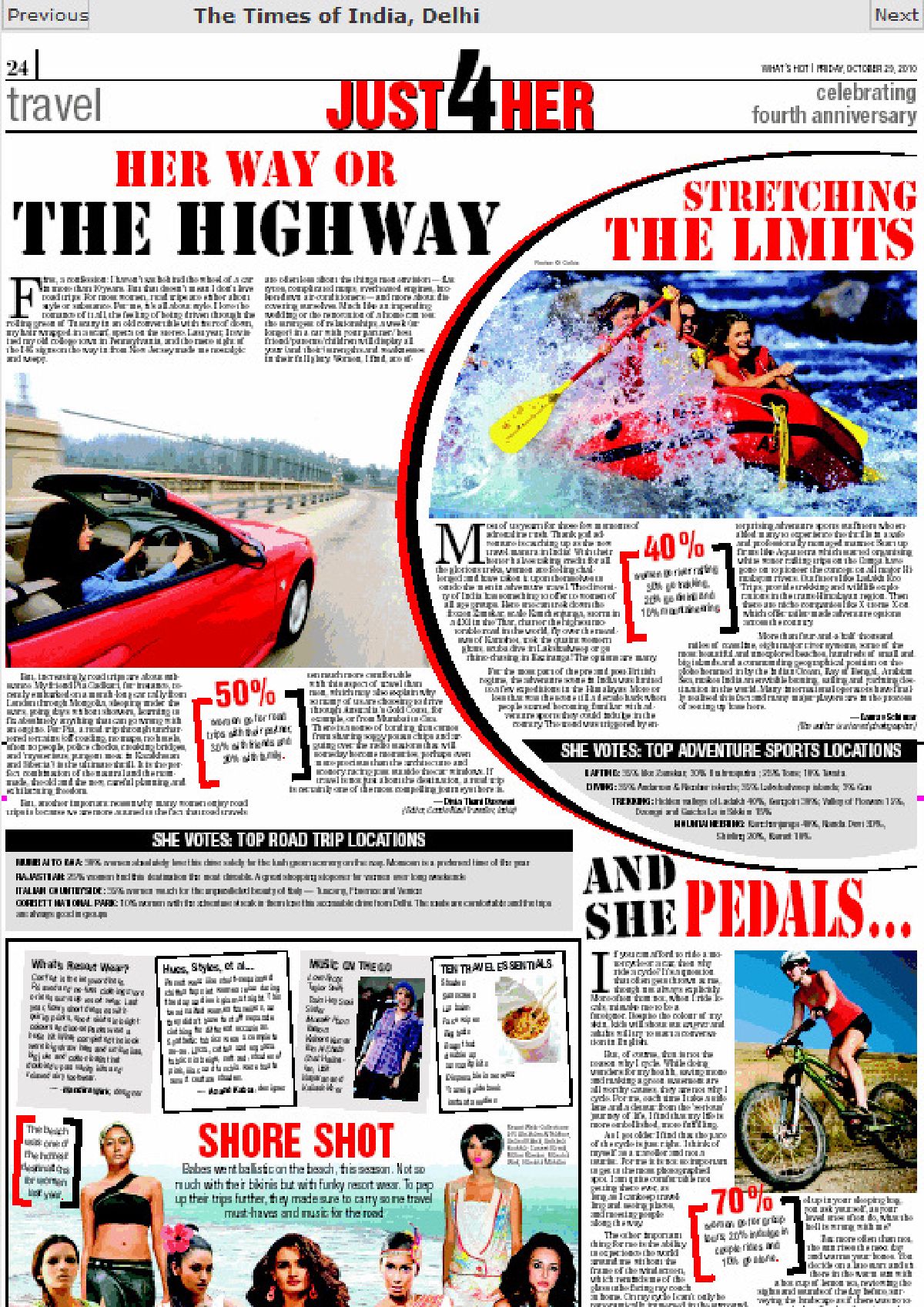
First published in Times of India on October 29, 2010. Nice to be featured in the ‘Just4Her’ section of ‘What’s Hot’ ;-).
If you can afford to ride a motorcycle or a car, then why ride a cycle. Its a question that often gets thrown at me, though not always explicitly. More often than not, when I ride, locals mistake me to be a foreigner. Despite the colour of my skin, kids will shout out ‘angrez’ and adults will try to start a conversation in English.
Continue reading →28 Oct 2010
· comment
Food and Agriculture Organization of the United Nations (FAO) started an online petition to put pressure of governments to end hunger. The petition will be presented to governments at an event taking place in Rome, Italy on 29 November 2010.
You can sign the petition and put pressure on politicians to end hunger. And you can help put even more pressure on politicians by asking family, friends and colleagues to sign the petition.
Continue reading →22 Oct 2010
· comment
For sometime now I have held this belief that we need to market healthy food to kids as if it were junk food. I sometimes ‘joke’ that if we were to stop our children from eating spinach and carrots along with chips they just might find the former two a little more attractive.
I have actually noticed that kids who are not at all happy to eat vegetable will often happily eat a baked dish loaded with vegetables. Kids who will spit out the ‘pallak’ that comes with the ‘paneer’ will often relish a spinach and corn baked. Well, at least mine do (small sample size, I know). To test the theory I once toyed with the idea of starting a fast-food restaurant for kids that served only ‘junk food’. Well, that is what it would be ‘marketed’ as to the kids, but actually the food would be healthy and balanced. I even thought up part of the menu, branding, packaging… Unfortunately you cannot always cook everything you can think up, and the idea stayed untested…
Continue reading →21 Oct 2010
· comment
The mantra “world’s-second fastest-growing-economy” is often thrown at every problem this country faces as if it were a solution. It reminds me of the ‘mere pas ma hai’ dialogue from ‘Deewar’. I must admit that if you are wealthy and live in an upmarket area of a metropolis, it is easy to miss the big picture. We are swamped by air-conditioned malls, multiplexes, BMWs, fancy toll-roads, huge corporate hospitals, swanky airports; clearly we must be making rapid progress, right? Well, data shows that is not the case. On an individual level some wealthy people like you and me are much better off than we were a couple of years ago, but that cannot be said of the other one billion citizens of India. Data from official Government of India publications, World Health Organization (WHO), World Bank, International Monetary Fund (IMF) reports underlines this bitter truth.
Continue reading →![Packing suggestion for multi-day self-supported cycling trip [1.0]](/images/DSCN0124-m_hu_4668ec29646b2083.jpg)
11 Oct 2010
· cycling
After I came back from my recent self-supported Manali to Leh cycling trip many people wanted to know what I carried on the trip. So here is a list based on what we carried. There were two of us, and we figured that some of the items could easily be shared, so we did not carry two of every thing (I think there are some exceptions to this, but I guess that advice could be another post). The list has four main sections:
Continue reading →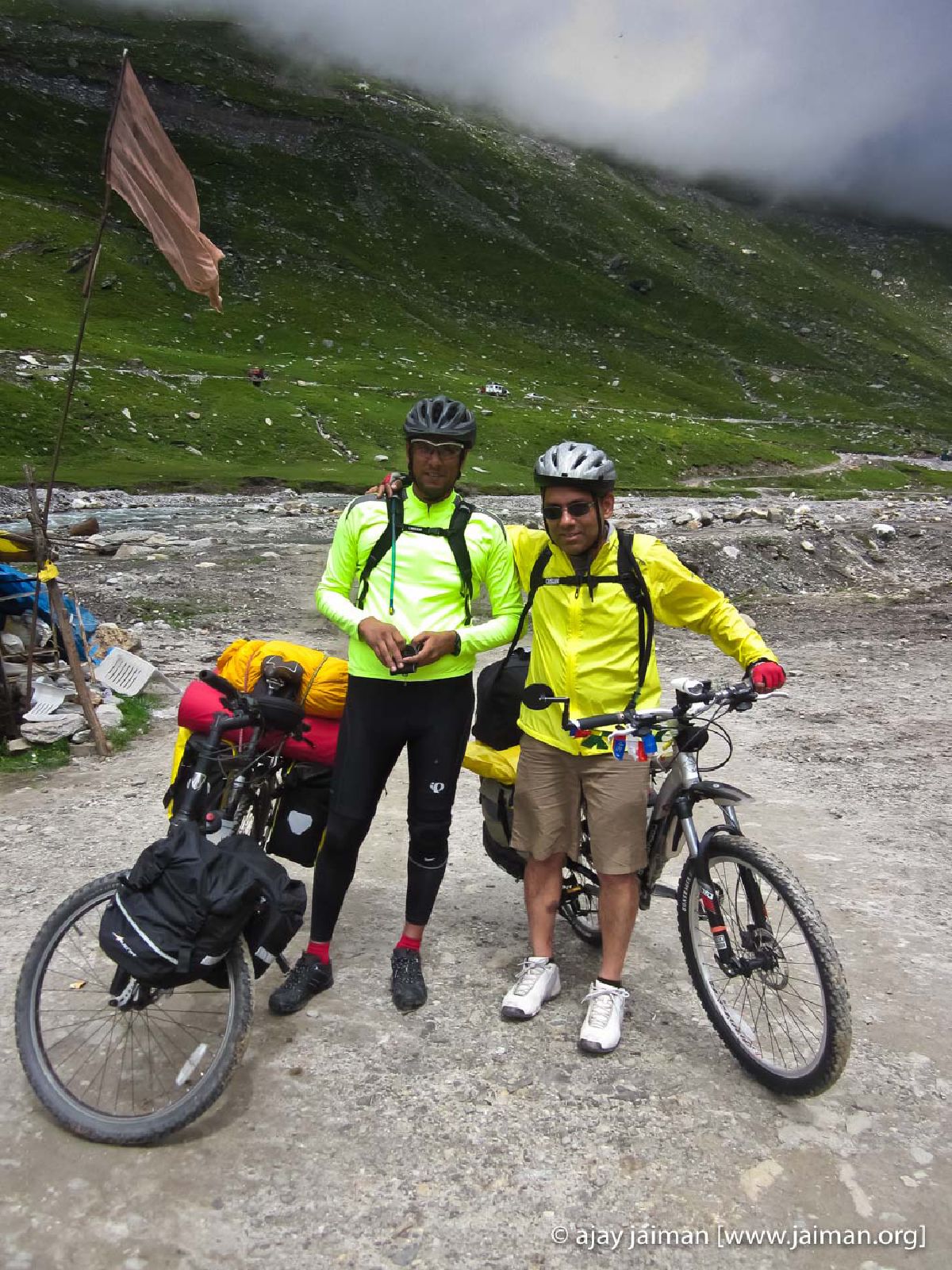
10 Oct 2010
· cycling
Ride report form September 2010 Ride dates: September 4th to 14th, 2010
Two riders: Sanjay Jaiman and Ajay Jaiman
After years of thinking about it and weeks of planning we finally did it. Close to 600 kms of cycling from Manali to Leh (because Tanglang La was closed and we had to take a detour at Debring and go via Tso Kar and Mahe bridge).
We rode with all our gear including clothes, sleeping bags, tent, stove, utensils, food, water, cycle spares on our cycles – an estimated weight of about 25 kgs (not counting the weight of the bikes, pannier racks, and bags.
Continue reading →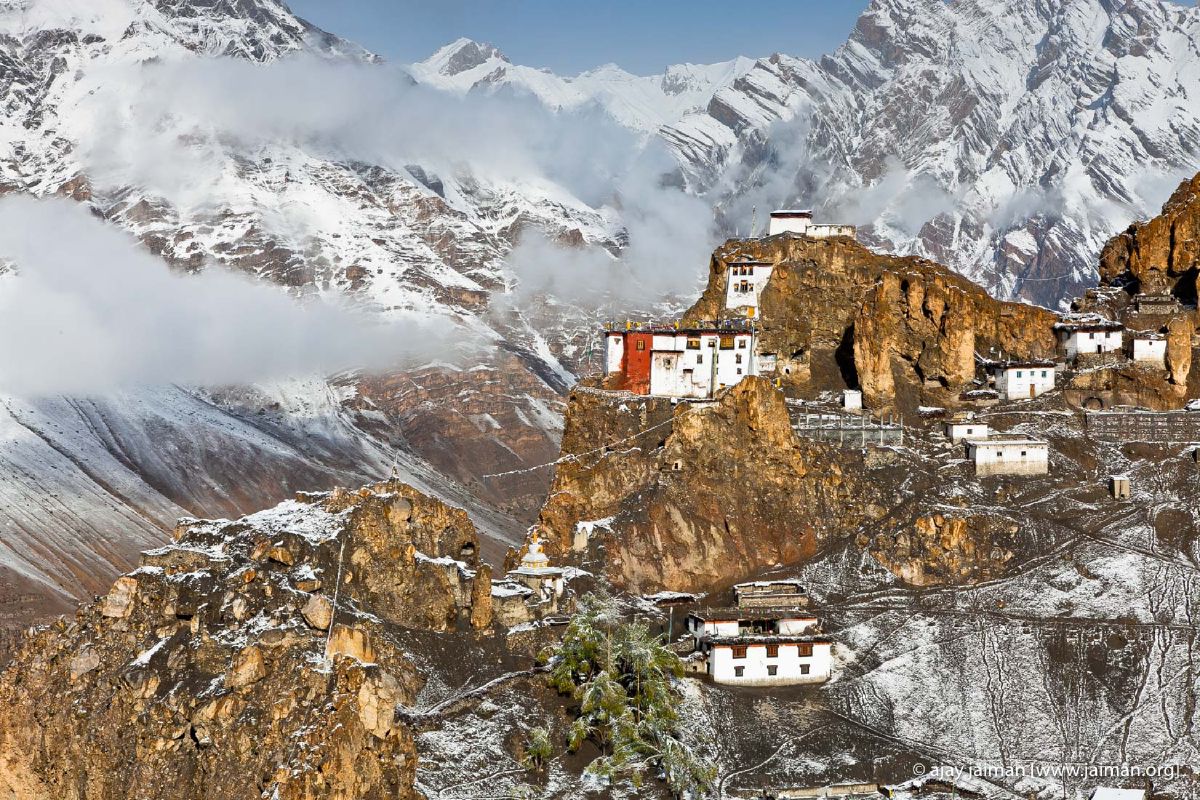
10 Jul 2010
· adventures
In June I traveled almost the entire length of the Spiti valley in the ‘European backpacker’ style. Using local buses (non-a/c with non-reclining seats), hitching rides, and hiking– from village to village and from monastery to monastery; eating in ‘dhabas’, staying in village homes, monasteries; making new friends (some of whom were perpetual travelers – they do not have a stable snail mail address)…
It is an absolutely incredible way to see the countryside. The slow pace of waiting for buses and hitches, or walking the mountains gives you all the time you want to experience the landscape in a whole different way – I should know because I have been through this valley multiple times before, but I saw it differently this time. And if you like landscape photography then the slow pace allows you to see the landscape again and again in changing lights too…
Continue reading →29 Jun 2010
· comment
affluenza, n. a painful, contagious, socially transmitted condition of overload, debt, anxiety and waste resulting from the dogged pursuit of more…
An epidemic of stress, overwork, waste and indebtedness caused by the relentless desire for more material success and economic growth.
PBS has a diagnostic quiz. Take the Quizto find out if you suffer from this condition.
Continue reading →24 Jun 2010
· comment
The International League of Conservation Photographers, a fellowship of the top professional conservation photographers working today, was recruited to nominate nature photographs that the member photographers considered to be ’the best,’ in whatever way they chose to define it, to celebrate the 40th anniversary of Earth Day
Continue reading →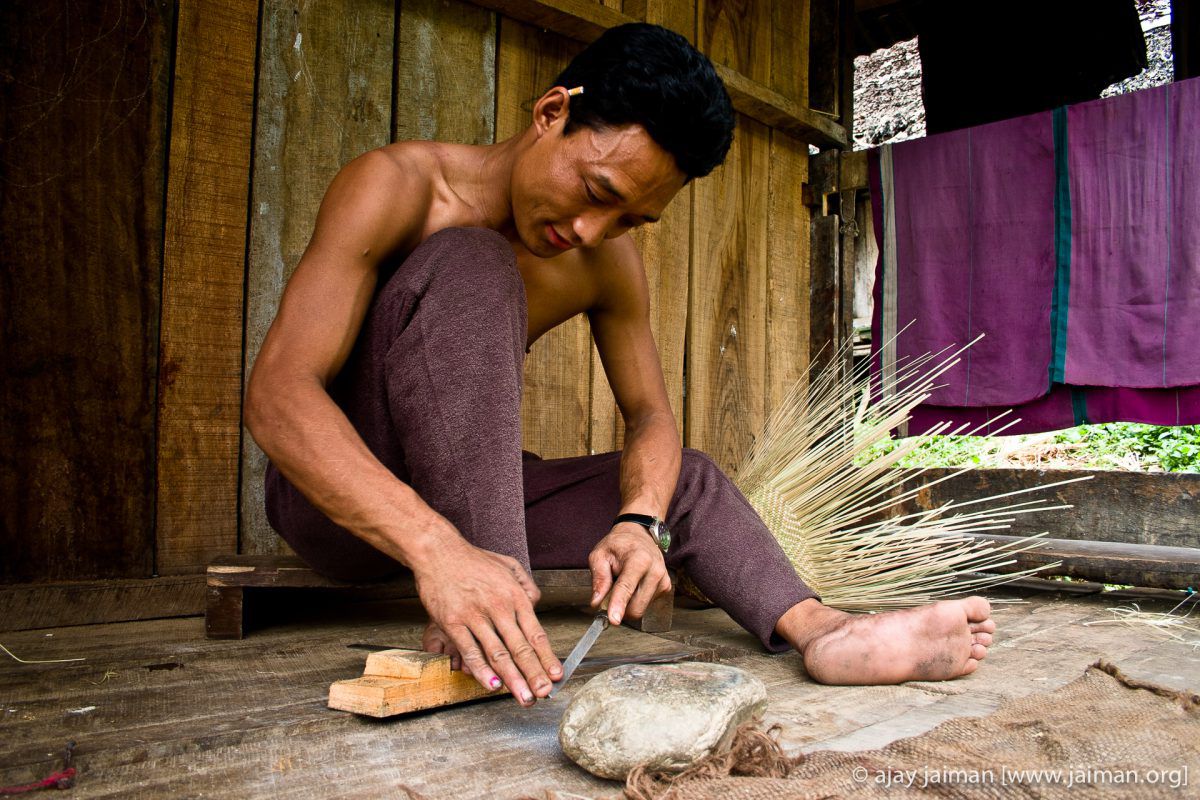
15 Jun 2010
· travel
Ziro is a quaint name for an unknown town hidden in the undergrowth of the deep jungles of Arunachal Pradesh – a state that is itself tucked away in the north-east of the country and is clearly not on the tourist map. Just the kind of place I long for
A rather upright hill in the middle of an expansive, flat valley that jostles with lush green farms and endless bamboo groves, houses this little guest house. It just sits there whitewashed plastered bamboo walls and rusted tin roof, under a glorious blue sky and stinks to high heaven. A pity? Or perhaps a minor inconvenience for keeping the geography inaccessible to people who don’t yet know how to drive without high-beam or use a camera without flash.
Continue reading →